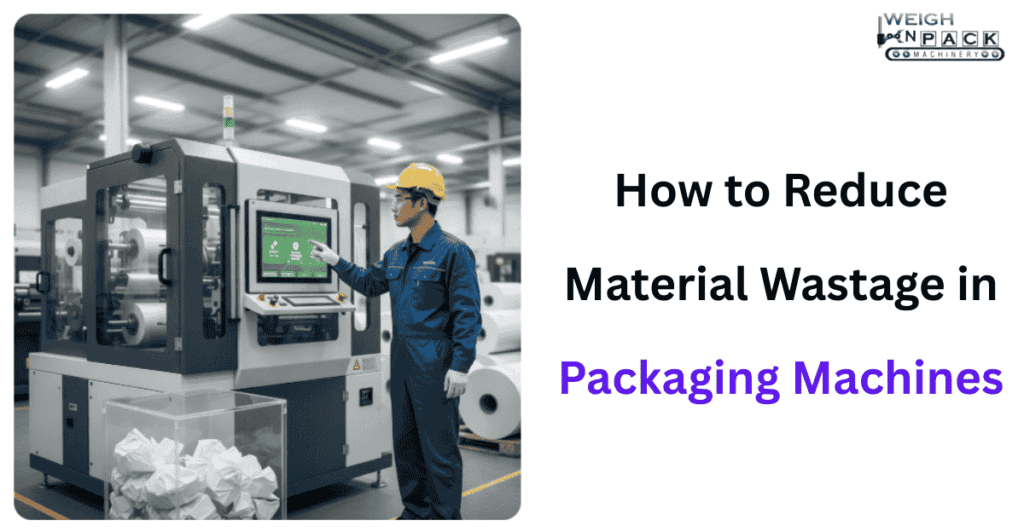
Material wastage is one of the silent profit killers in packaging operations. Every torn film, misaligned seal, or inaccurate fill level slowly eats into margins—especially when you’re running machines at scale. The good news? Most wastage is preventable. By optimizing machine settings, upgrading components, and building better processes, manufacturers can significantly reduce overheads while improving packaging consistency.
At WeighnPack, a trusted manufacturer of packaging machine, we see a common pattern across industries: material waste is rarely caused by one big issue. Instead, it’s the result of multiple small inefficiencies that build up over time. Let’s break down the most practical ways to reduce material wastage in packaging machines using a semantic, system-based approach.
1. Start With Material Compatibility
Your packaging material must match the machine’s sealing type, temperature capacity, and forming style. When there’s a mismatch, wastage becomes unavoidable.
Check for:
Film thickness consistency
Slip coefficient of the material
Sealability with your machine’s heat or pressure profile
Stretching or tearing during forming
Sometimes, switching to a slightly higher-quality film reduces tearing and saves more in the long run compared to cheap material that fails frequently.
2. Optimize Machine Calibration & Settings
Most material waste originates from incorrect machine settings. Even minor misadjustments cause repetitive errors.
Critical settings to audit:
Sealing temperature
Sealing pressure
Cutting blade alignment
Product feeding timing
Forming tube alignment
If your packaging machine seals too hot, the film burns. When pressure is too low, seals fail and bags get rejected. Regular calibration minimizes these losses.
3. Reduce Wastage With Advanced Weighing & Filling Accuracy
Overfilling and underfilling both contribute to wastage—either through excess material usage or rejected packs.
Modern weighers solve this through:
Multi-head combination weighing
Auto-feedback loops
In-motion product sampling
At WeighnPack, our systems self-adjust fill accuracy based on continuous real-time data, reducing giveaway product and unnecessary packaging consumption.
4. Automate Quality Checks
Human inspection alone isn’t enough for high-speed operations. Automation can instantly detect errors before the production line continues.
Waste-reducing technologies include:
Vision inspection for seal integrity
Checkweighers to spot under/overfilled packs
Leak detectors for pouches
Metal detectors to prevent batch rejections
Detecting issues early prevents hundreds of faulty packs from being produced.
5. Maintain Cutting & Sealing Components
A worn-out blade or heating element can destroy metres of film before the issue is even noticed. Maintenance is one of the simplest but most overlooked methods of reducing waste.
Focus areas:
Keep cutting knives sharp
Replace worn sealing jaws
Clean residue buildup regularly
Inspect rollers and tensioners
Preventive care always costs less than material loss.
6. Improve Material Feeding & Film Tracking
Misaligned film is one of the biggest hidden causes of waste. A few millimetres off-track is enough to ruin hundreds of bags.
To reduce alignment errors:
Use auto film tracking sensors
Ensure proper tension control
Calibrate rollers for smooth feeding
Prevent slippage by avoiding dust or oil on rollers
When the film feeds consistently, material waste drops drastically.
7. Train Operators & Standardize Processes
Even the best packaging machine needs skilled operators.
Effective training should cover:
How to recognize early signs of wastage
Proper startup/shutdown procedures
Correct material loading
Optimal changeover techniques
Clear SOPs reduce human mistakes and keep the line running efficiently.
8. Use Data Monitoring & Analytics
Smart packaging lines use sensors and data logs to track inefficiencies automatically. You can monitor real-time parameters such as:
Reject ratio
Film usage per batch
Seal failure rate
Fill deviation %
When you know exactly where waste is happening, you can fix the root cause instead of guessing.
9. Reduce Changeover Waste
Every time you switch materials, products, or SKUs, there’s a risk of unnecessary wastage.
To minimize this:
Use quick-change tooling
Pre-set machine recipes for each SKU
Run test cycles at slow speed
Keep material specs standardized
A smooth changeover saves tons of material over a year.
10. Consider Upgrading to Energy-Efficient & Waste-Optimized Machines
Modern machines are built with lean manufacturing principles in mind. If you’re using old equipment, sometimes the most cost-effective solution is an upgrade.
Benefits of WeighnPack’s advanced systems:
Lower seal failure rate
Improved fill accuracy
Minimal film wastage
Automatic error correction
Faster ROI due to compatibility with diverse materials
A machine designed for precision naturally reduces wastage over its lifetime.
Conclusion: Wastage Isn’t Just a Cost—It’s an Opportunity to Improve
Reducing material waste in packaging machines isn’t about fixing one issue. It’s about improving the entire ecosystem—material choice, machine configuration, operator skill, and automation.
By implementing the steps above, manufacturers can achieve:
Lower production costs
Higher packaging quality
Longer machine life
Better sustainability performance
If you’re looking to optimize your packaging line, WeighnPack offers engineering-driven solutions designed to reduce errors, control wastage, and improve throughput at every step.