
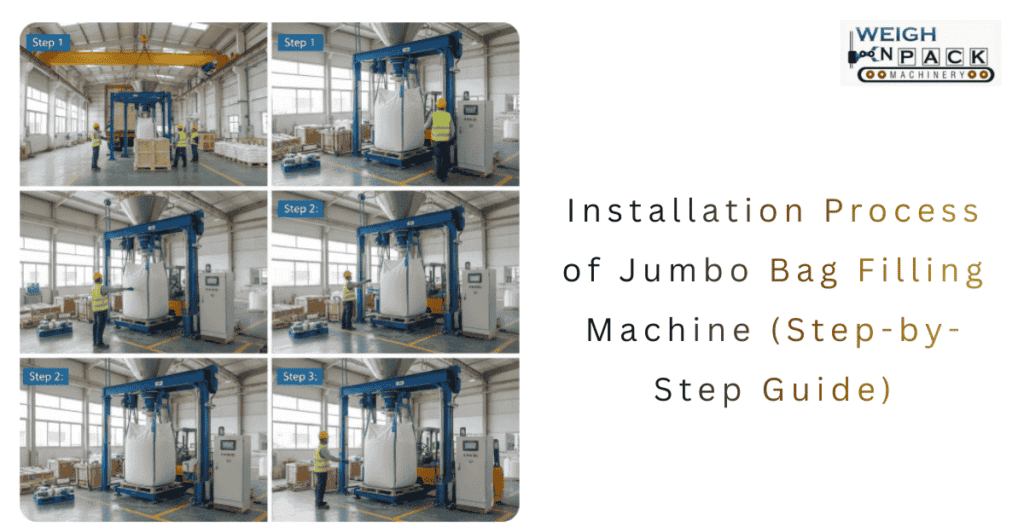
Installing a Jumbo Bag Filling Machine is not very hard if you follow the correct steps. But it must be done carefully. A small mistake can create big problems later.
This guide explains the complete installation process of jumbo bag filling machine in very simple words. Even if you are new to this machine, you will understand everything clearly.
We will cover
-> Site preparation
-> Machine unloading
-> Mechanical setup
-> Electrical connection
-> Air connection
-> Trial run
-> Safety checks
-> Final testing
Let’s start from the beginning.
What Is a Jumbo Bag Filling Machine?
A Jumbo Bag Filling Machine is used to fill large bags (also called FIBC bags, bulk bags, or super sacks) with powder, granules, or bulk material.
These bags are usually 500 kg to 2000 kg capacity.
This machine is also known as:
-> Big Bag Filling Machine
-> Bulk Bag Filling System
-> Super Sack Filling Machine
-> FIBC Filling Machine
Before using the machine, proper installation is very important.
Why Proper Installation Is Important?
Correct installation helps in:
-> Accurate weight filling
-> Smooth machine working
-> Long machine life
-> Worker safety
-> Less maintenance problem
If installation is wrong:
-> Machine vibration increases
-> Weight accuracy becomes poor
-> Parts get damaged fast
-> Production stops frequently
So, always follow the proper jumbo bag filling machine setup procedure.
Step 1: Site Preparation Before Installation
Before bringing the machine, prepare the site properly.
1. Strong Floor Foundation
The machine is heavy. The floor must be:
-> Strong concrete base
-> Flat and level
-> Vibration-free
If the floor is weak, machine alignment will disturb.
2. Enough Space
Keep enough space around the machine for:
-> Operator movement
-> Forklift movement
-> Bag loading and unloading
-> Maintenance work
Minimum 1–1.5 meter space around machine is recommended.
3. Power Supply Ready
Check:
-> Voltage requirement
-> 3-phase connection (if required)
-> Proper earthing
4. Air Supply Arrangement
Most bulk bag filling systems need compressed air.
Install:
-> Air compressor
-> Air dryer (if required)
-> Air pipeline near machine
Step 2: Machine Unloading and Positioning
After the machine reaches your factory:
1. Safe Unloading
Use:
-> Crane
-> Forklift
-> Lifting belts
Do not lift from weak points. Always lift from recommended lifting hooks.
2. Check for Damage
Before installation:
-> Inspect for transport damage
-> Check panels, load cells, frame
-> Verify all parts received
3. Position the Machine
Place the machine at the exact installation point.
Make sure:
-> It is aligned properly
-> It is centered with material feeding system
This is part of the big bag filling machine installation process.
Step 3: Mechanical Installation
Now we begin the actual jumbo bag filling machine setup.
1. Fix the Machine to Floor
Use:
-> Anchor bolts
-> Proper drilling
-> Tight fitting
This prevents vibration during operation.
2. Level the Machine
Use spirit level to check:
-> Front side
-> Back side
-> Left and right
Machine must be perfectly level. Otherwise weight accuracy will change.
3. Install Feeding System
Connect:
-> Screw feeder
-> Belt conveyor
-> Gravity feeding hopper
Make sure material flows smoothly.
4. Attach Bag Holding System
Fix:
-> Bag hanging hooks
-> Inflatable neck clamps
-> Bag support platform
These parts hold the FIBC bag properly during filling.
Step 4: Electrical Installation
This step must be done by a qualified electrician.
1. Main Power Connection
Connect main power cable to:
-> Control panel
-> Motor
-> Load cells
Check voltage before switching ON.
2. Proper Earthing
Earthing is very important for:
-> Safety
-> Protection from electric shock
-> Stable weight reading
3. Control Panel Check
Verify:
-> Display working
-> Buttons responding
-> Emergency stop functioning
This completes the electrical part of the FIBC filling machine installation steps.
Step 5: Pneumatic (Air) Connection
Most super sack filling machines use air for:
-> Bag clamping
-> Dust control
-> Gate opening & closing
1. Connect Air Line
Connect air pipe to:
-> FRL unit (Filter, Regulator, Lubricator)
-> Pneumatic valves
2. Set Air Pressure
Normal air pressure: 5–7 bar (depends on machine model)
-> Too high pressure can damage cylinders.
-> Too low pressure will not clamp bag properly.
Step 6: Load Cell Calibration
Load cells are used for weight measurement.
This is a very important part of the installation process of jumbo bag filling machine.
1. Zero Calibration
Turn ON machine and:
-> Remove all weight
-> Set zero value
2. Test Weight Calibration
Place known weight (example: 50 kg)
Check:
-> Display shows correct weight
-> Adjust if needed
Correct calibration ensures accurate filling.
Step 7: Trial Run Without Material
Before real production:
Do a dry run.
Check:
-> Motor rotation direction
-> Air cylinder movement
-> Gate opening & closing
-> Control panel settings
Fix problems if found.
Step 8: Trial Run With Material
Now test with small quantity material.
1. Hang Empty Bag
Attach FIBC bag properly.
2. Start Filling
Observe:
-> Material flow
-> Dust control system
-> Weight accuracy
3. Check Final Weight
If target is 1000 kg:
-> Check final weight on weighing scale
-> Adjust fine feeding speed if needed
This step is called commissioning process of bulk bag filling machine.
Step 9: Safety Checks
Safety is very important.
Check:
-> Emergency stop button
-> Overload protection
-> Safety guards
-> Proper grounding
Train operators before starting full production.
Step 10: Final Inspection and Handover
After successful trial:
-> Tighten all bolts
-> Clean machine
-> Prepare installation report
-> Provide operator training
Now machine is ready for regular production.
Common Problems During Installation
Here are some common mistakes:
1. Uneven Floor
Result: Wrong weight reading.
2. Loose Bolts
Result: Vibration and damage.
3. Wrong Air Pressure
Result: Bag clamp failure.
4. Improper Calibration
Result: Underfilling or overfilling.
Avoid these mistakes during industrial bag filling machine installation.
Tools Required for Installation
Basic tools needed:
-> Spanner set
-> Drill machine
-> Spirit level
-> Multimeter
-> Air pressure gauge
-> Test weights
Having proper tools makes the machine setup procedure easy.
How Long Does Installation Take?
Normally:
-> Small machine: 1–2 days
-> Medium system: 2–3 days
-> Fully automatic system: 3–5 days
Time depends on:
-> Site readiness
-> Machine size
-> Number of connected systems
Who Should Install the Machine?
Installation should be done by:
Manufacturer technician
OR
Experienced mechanical and electrical team
Professional installation ensures:
Proper performance
Warranty protection
Long life
Maintenance Tips After Installation
After successful jumbo bag filling machine setup, follow these tips:
-> Check bolts weekly
-> Clean load cells
-> Maintain air pressure
-> Lubricate moving parts
-> Calibrate weight monthly
Regular maintenance avoids production problems.
Important Safety Tips
Always remember:
-> Never stand under hanging bag
-> Use safety gloves
-> Do not open panel when power ON
-> Keep area clean
-> Train all operators
Safety first, always.
Final Words
The Installation Process of Jumbo Bag Filling Machine is not complicated, but it must be done carefully and step by step.
If installation is done correctly:
-> Machine runs smoothly
-> Weight accuracy stays perfect
-> Production increases
-> Maintenance cost reduces
Whether you call it:
->Jumbo Bag Filling Machine Installation
-> Big Bag Filling Machine Setup
-> FIBC Filling Machine Installation Guide
-> Bulk Bag Filling System Setup
-> Super Sack Filling Machine Commissioning
The process remains mostly the same.
Always follow proper steps, use trained technicians, and test the machine properly before starting full production.
A well-installed machine works better, lasts longer, and gives you peace of mind.